
IMMS: Injection Molding Monitoring System
A camera in front of every molding machine, counting production, catching failed shots and logging every stoppage with a reason. Twenty-one machines at Tech Arch Autocomp, running around the clock, on one live screen.
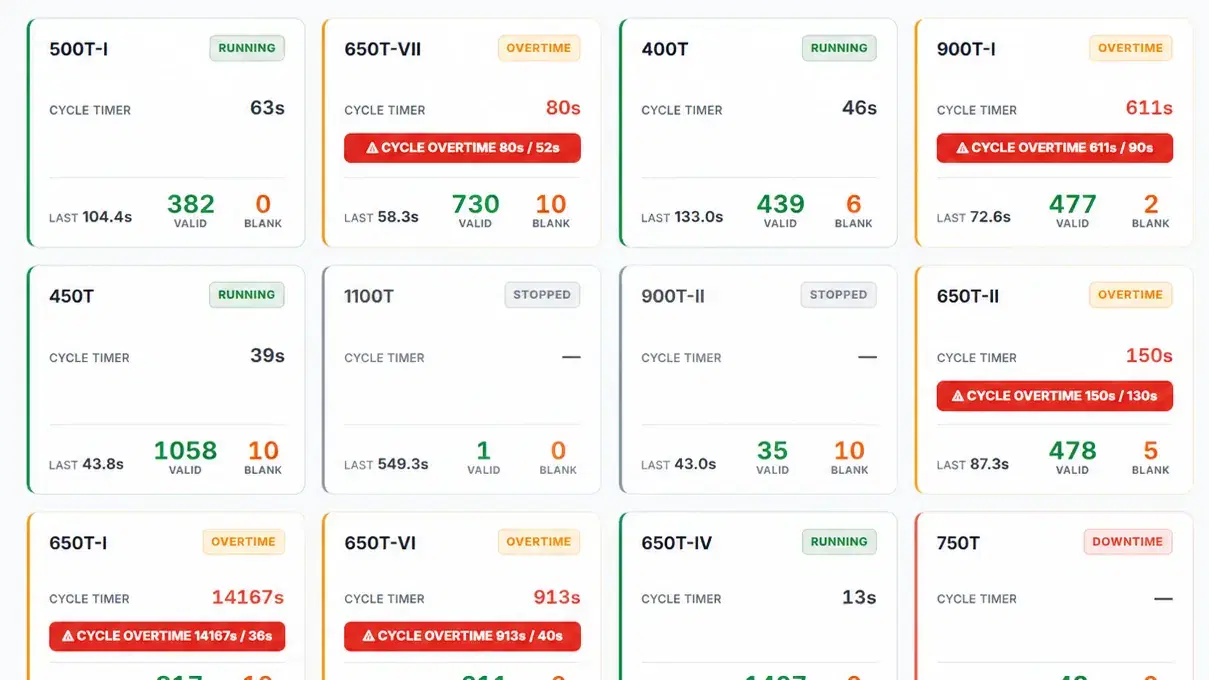
- Machines monitored
- 21
- Operating pattern
- 24/7, all shifts
- Detection accuracy
- Above 98%
- Machine modification
- None
Key results
- 98%+
- detection accuracy on live production
- 100%
- of stoppages, failed shots and slow cycles now captured
- Zero
- operators still counting parts by hand
- 21
- machines monitored around the clock
Jump to section
The challenge
Tech Arch Autocomp runs twenty-one injection molding machines around the clock, making plastic parts for the automotive industry. None of those machines could tell anyone what they were doing. Operators counted parts onto paper sheets, supervisors judged rejects by eye, and the numbers reached the office hours after the shift they described. By then nothing could be recovered. Four losses went unmeasured entirely: machines that stopped without anyone being told, machines that cycled without producing a part, cycles that quietly ran slower than their rated time, and the absence of any single view across the floor.
What we built
Sucetas installed IMMS, a production intelligence platform that watches each machine with its own camera and reads the cycle the way an experienced supervisor would, without ever looking away. Nothing is wired into the machine and nothing about the machine changes. Every good part is counted, every failed shot is flagged within seconds, every stoppage is timestamped and given a reason, and the whole plant appears on one live screen that anyone can open from a phone, a tablet or the office PC.
The cost of counting by hand
On most molding floors the production number is assembled by people. An operator leaves the machine to write a tally. A supervisor walks the line and judges rejects by eye. Someone in the office retypes the sheets hours later. The owner sees the loss roughly half a day after it happened.
Every step in that chain costs time and introduces a place for the number to drift. Worse, the things that hurt most are the things nobody is even trying to record: the stoppage that went unnoticed, the mold that opened empty, the cycle that crept past its rated time.
- A machine stops and nobody is told until someone walks past it
- A machine cycles without producing a part, and the manual count never notices
- Cycles slow down gradually and no one measures the drift
- Each machine stands alone, with no single view of the plant
One camera per machine, and the plant on one screen
IMMS turns the camera itself into the sensor. A camera faces the mold area, the software learns what that mold looks like at each stage of its cycle, and from then on it reads the machine continuously.
A complete sequence counts as one good part. A cycle that opens with nothing in it is recorded as a failed shot rather than quietly counted as production. Because the camera is doing the sensing, the system fits any machine of any age or make, and installation does not interrupt production.
- Fits in under an hour per machine, with no wiring into the machine
- Works on old and new machines alike, with no data port required
- Handles pick-and-place robots and multi-cavity tools, counting each correctly
- Everything runs on one computer inside the plant, so footage stays in the building
Every stoppage carries a reason
Knowing that a machine stopped is not useful on its own. IMMS works out why, so the team can see where the hours are actually going, and so a stoppage stops being something to argue about at the end of the shift.
Each stoppage is logged with a start, an end, a duration and a cause. Supervisors can confirm or amend the reason, and the hourly report rolls the whole thing up automatically.
- Machine stopped, with no cycles running
- Maintenance, where a person is present at the machine
- Monitoring interrupted, and the reason it was interrupted
- Power loss
- Cycle overtime, where a cycle ran slower than its rated time
- Failed shot, where the cycle produced nothing
Reports the office can act on the same hour
The production report breaks every machine down hour by hour, grouped by shift, with target against actual and the efficiency that follows from it. Shifts can be compared side by side, and any report exports to a spreadsheet for the management review.
Because the counts come from the machines rather than from a tally sheet, OEE stops being an estimate. It is computed from what actually happened.
The plant team runs it themselves
A production line that needs a vendor visit every time a mold changes is a line that will stop using the system. IMMS was built so the plant's own staff set up a new mold through a guided wizard, in about half an hour, with no code and no callout.
The system also looks after itself. After a power cut it comes back on its own within a couple of minutes, with no one needing to log in and restart anything.
Inside the system
What it does
Live monitoring
- Every machine as a live card with its current state, cycle timer and running counts
- Colour-coded machine states, so the whole line reads in one glance
- Cycle-overtime warning the moment a cycle runs past its rated time
- Instant alerts for repeated failed shots, idle machines and lost camera feeds
- Hourly recordings for every machine, so any event can be replayed
Counting and quality
- Automatic counting of good parts and total cycles, with no manual entry
- Failed-shot detection, with a warning when they start repeating
- Correct counting for multi-cavity tools and robot-assisted machines
- Mold-change tracking, so changeover time is visible rather than absorbed
Reporting and analysis
- Hour-by-hour production table for every machine, grouped by shift
- OEE and efficiency measured against target, per hour and per shift
- Downtime log with start, end, duration and cause
- Shift against shift and machine against machine comparison
- Export to spreadsheet for management review
Running it day to day
- Role-based access for operators, shift incharges and administrators
- Guided in-house setup for a new mold, in about half an hour
- Automatic recovery after a power cut
- Accessible from any phone, tablet or PC on the plant network
What changed
- Above 98 percent detection accuracy on live production
- Every stoppage, failed shot and slow cycle now captured rather than estimated
- Paper tally sheets retired, with no operator still counting by hand
- OEE computed from real production instead of being guessed at
- Losses visible while the shift is still running, not a day later
- Twenty-one machines readable from one screen, on any device on the plant network
We can finally see every machine at once, and we see it while the shift is still running. Losses that used to surface a day later now surface in minutes.
Common questions
Does anything have to be wired into the molding machine?
No. A camera is positioned to see the mold area and the machine itself is left alone. There is no retrofit wiring, no data port requirement and no interruption to production during installation.
Will it work on older machines?
Yes. Because the camera does the sensing rather than a sensor bolted into the machine, IMMS works on machines of any age or make, including machines with no digital output of their own.
What happens when we change the mold?
Your own team sets up the new mold through a guided wizard on the dashboard. It takes around half an hour and needs no code and no visit from us.
Where does the footage go?
It stays inside your plant. The system runs on a computer in the building, so factory footage does not leave the site.
What happens after a power cut?
The system restarts itself within a couple of minutes. Nobody has to log in and bring it back up.
Can it be used outside injection molding?
The same approach reads any machine that repeats a cycle, which covers press shops, assembly lines and packaging floors. Injection molding is simply where we started, because that is where the problem was clearest.
Written for a business audience, so implementation detail is deliberately left out. Last reviewed 23 September 2026.
What this project draws on
The capabilities behind this build, and the industry it was built for.
Want something like this?
Tell us what you are trying to measure, and we will tell you honestly whether we can help.
Talk to usMore of our work
Manufacturing
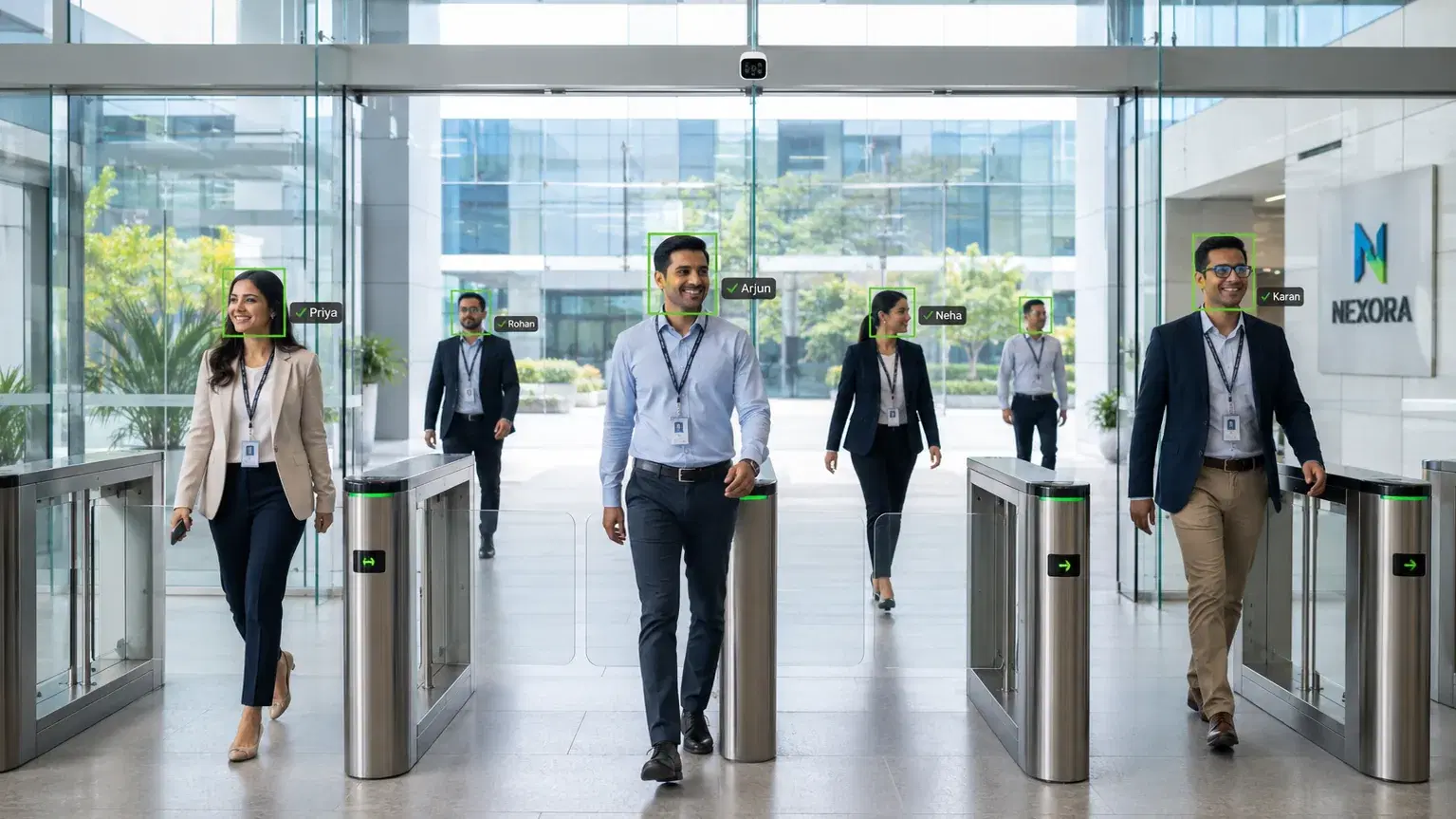
HRMS with Face-Recognition Attendance
Employees walk through the gate and their attendance takes care of itself. A face-recognition attendance platform with the full HR back office around it: shifts, leave, overtime, contractor labour and payroll-ready reports, across every plant at once.
Manufacturing
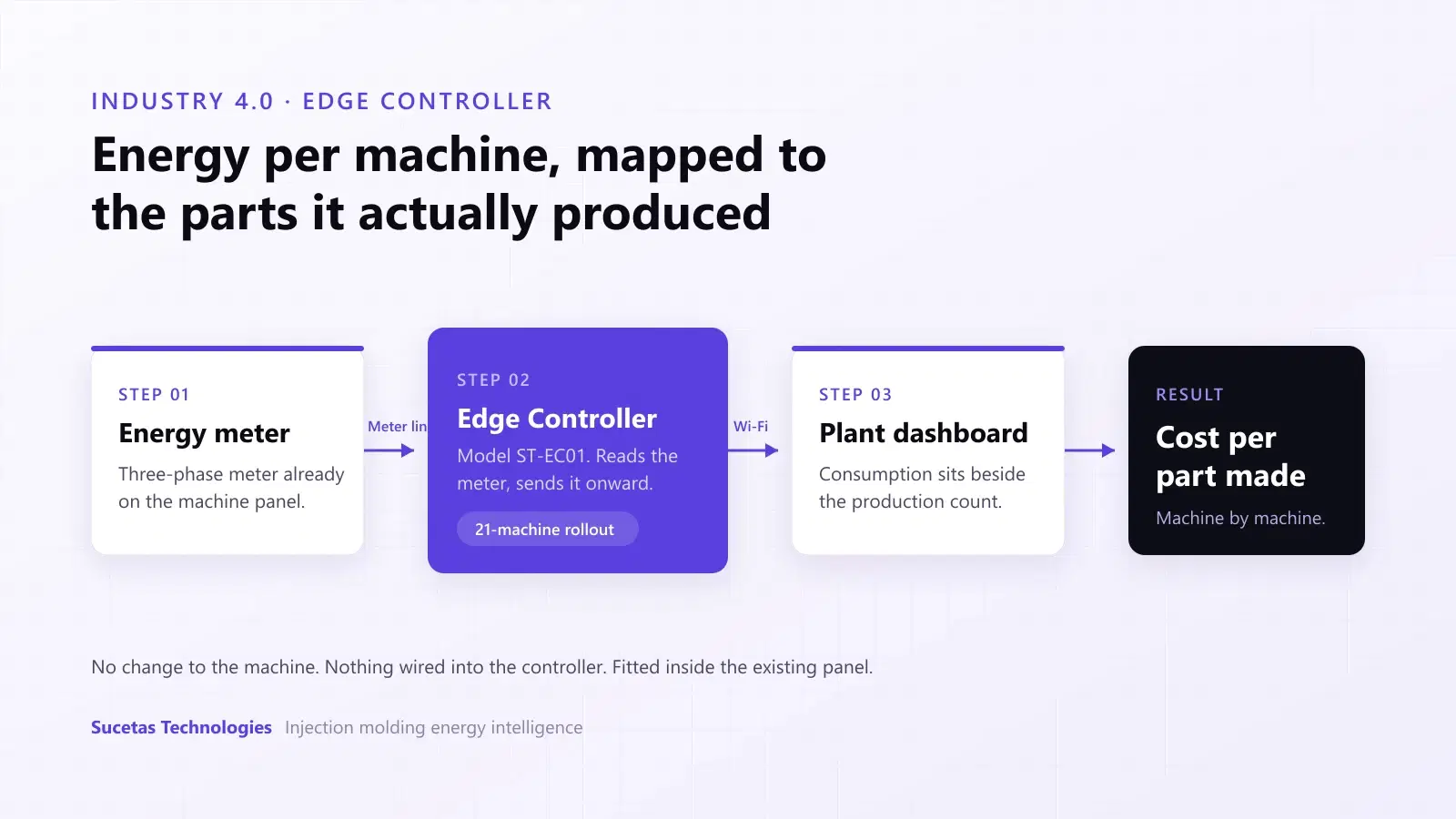
Edge Controller: Machine-Level Energy Monitoring
A small edge device in each machine's electrical panel, reporting how much electricity that machine draws, placed beside how many parts it produced. Twenty-one units, one plant, and a cost-per-part number that finally has a machine's name on it.
SaaS
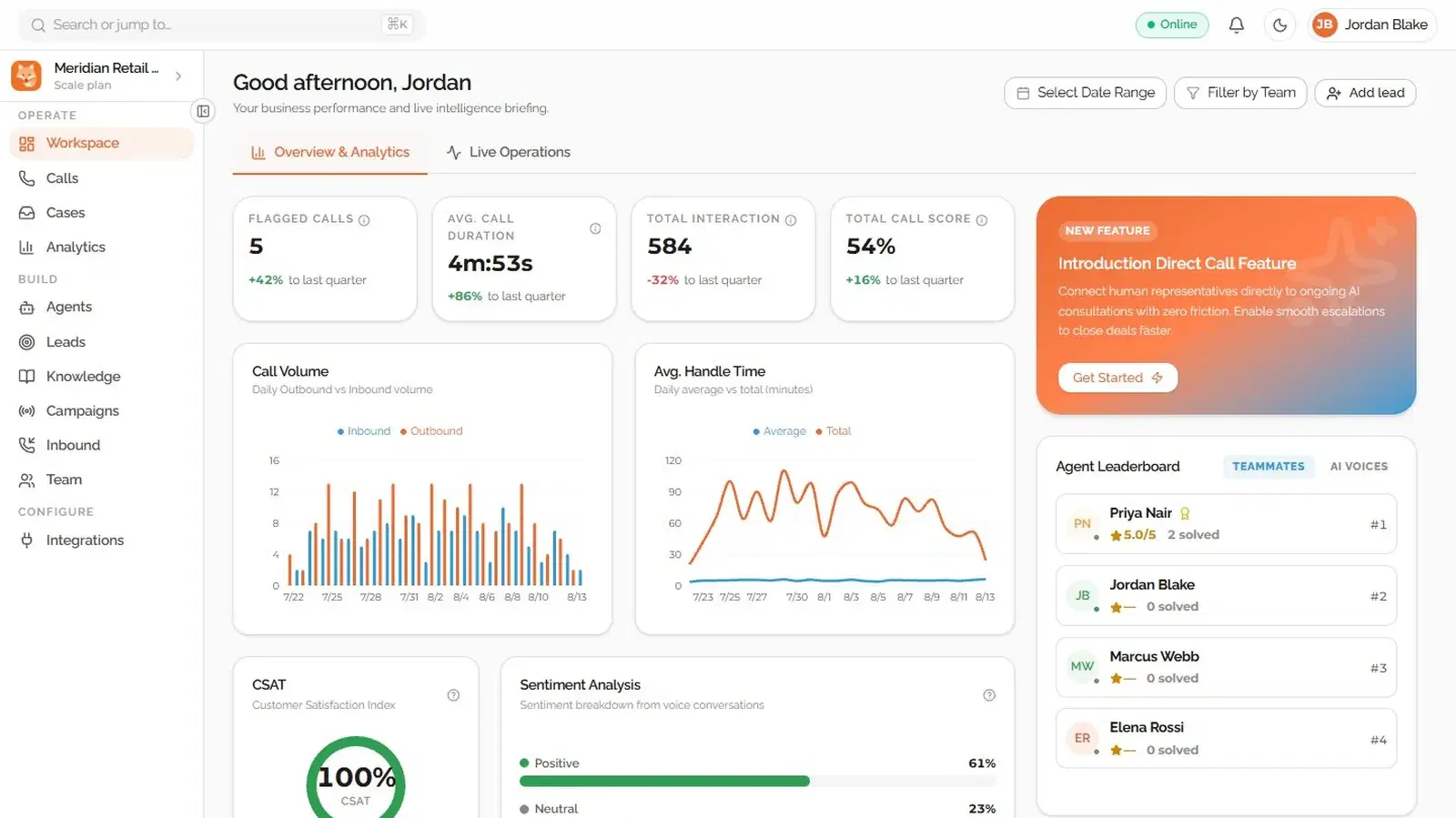
Dunefox: AI Customer Engagement Platform
Our own product, and the clearest demonstration of what we build. Dunefox brings support, leads and marketing into one AI-powered platform across web chat, WhatsApp, Instagram, Messenger and Telegram, now with AI voice agents that make and take phone calls.