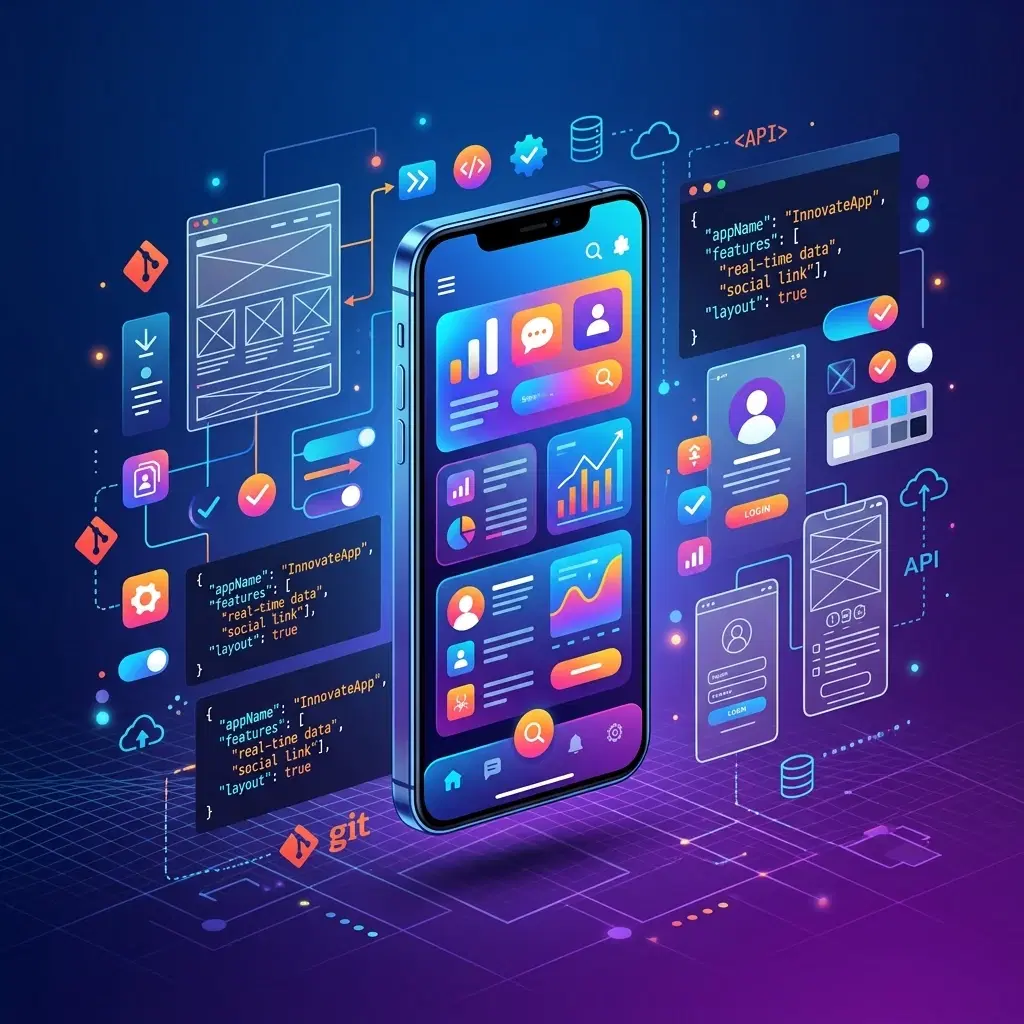
Building a mobile app sounds exciting. But the real work goes much deeper. Many teams join hands. Many steps shape the final product. And every tiny decision matters.
The mobile app market is growing fast. Worth $305 billion in 2026. Expected to reach $618 billion by the year 2031. Over 180 billion apps downloaded across App Store and Google Play. Numbers keep rising every year.
Today, almost 88% of users spend time inside mobile apps. People open apps more than websites. Brands understand this growing shift well. That is why nearly 43% of businesses invest in apps each year. The demand keeps rising nonstop. So learning the full process helps a lot.
1. It All Starts With One Idea
Every app begins with one thought. Someone notices a simple problem. Someone feels that something can improve. Someone says, “Let’s build this now.”
Teams sit together and discuss goals. They talk about who will use it. They check if the idea feels valuable. A clear purpose helps shape everything ahead. Good apps start small and focused. They solve one real issue first. Then they grow slowly over time.
2. Research Builds a Strong Foundation
This step looks boring to many. But research decides the app’s future. Teams study the market deeply. They analyse what users truly want. They review other apps carefully. Around 72% of failed apps skip this stage. And that mistake costs them later.
Teams look for answers like these:
Do users need this solution?
Are other apps doing the same?
What features matter the most?
What problems frustrate users today?
These answers shape the final direction.
3. Planning Gives the Project Structure
Planning keeps everything organised well. Teams create a simple app roadmap. They break features into small tasks. They decide what goes into version one. Not everything must launch early. Simple apps perform better initially.
Timelines become clear for everyone. Roles and responsibilities get assigned. The entire team moves in sync. A smooth plan prevents confusion later.
Looking for an artificial intelligence development company in India? Compare the top 10 AI development companies of 2026: their strengths, focus areas, and how to choose the right partner for your project.
Gaurav Divekar
5 min
This stage creates the app’s personality. Designers draw basic wireframes first. They map out each screen slowly. Every screen must feel natural. Good design makes users comfortable instantly.
Almost 94% of users judge apps by design first. So design plays a huge role. A clean layout wins trust quickly. A messy layout pushes users away.
Designers focus on key areas:
Easy navigation
Clear spacing
Smooth flow
Friendly buttons
Simple colours
Readable text
Small details create strong experiences.
5. Development Turns Screens Into Reality
Now the main work begins. Developers start building the actual app. Front-end teams handle visual parts. Back-end teams handle logic inside. APIs connect everything together smoothly.
Features get developed step by step. Nothing appears perfect instantly. But the app grows stronger daily. Performance matters a lot here. Slow apps lose users quickly. Smooth speed wins loyal users.
Testing saves apps from failure. Even great code has hidden issues. Testers check the app on devices. Different screens perform differently. Different networks cause new problems.
They test several areas:
Speed
Navigation
Crashes
Forms
Buttons
Login
Payment
Security
A tiny bug can break user trust. About 79% of users delete apps after bugs. So testing protects the entire project. Teams repeat testing many times. Each round improves the overall app.
7. Deployment Brings the App to Users
Launch day feels exciting for everyone. Teams push the app to app stores. Android and iOS follow different rules. Review processes take some time. Every detail must match the guidelines.
The team uploads screenshots carefully. They write short descriptions clearly. They prepare keywords wisely. Better listings bring better visibility. Once approved, the app goes live. Users start downloading instantly. Real feedback comes in slowly. Small bugs get fixed quickly. Marketing also becomes important now. More awareness brings more downloads.
8. Maintenance Keeps the App Stable
Work continues after the launch. Apps need regular updates always. New issues appear with new users. New OS versions break old features. Almost 61% of app costs go into maintenance long-term. Many people misunderstand this part. But updates keep apps strong and fresh.
Maintenance improves:
Security
Performance
Bug fixes
App speed
New features
UI changes
The app grows better with time.
Trends Shaping App Development in 2026
The mobile world keeps evolving fast. These trends shape apps in 2026:
AI-powered personalisation — apps learn user behaviour and show custom content to improve engagement.
Faster apps with edge computing — processing happens near the user, which boosts speed.
Micro-interactions everywhere — tiny movements make apps feel lively and responsive.
Focus on privacy and security — people care about safety now more than ever.
Why App Speed Matters Most
Speed is everything. A slow app dies quickly. Users leave fast. Studies show every one-second delay drops conversions by 7%. That is huge. Developers use lighter code, smaller images, faster APIs, and optimised servers. A fast app feels modern, premium, and reliable.
Why UI Simplicity Wins Today
Simple apps dominate today. Users prefer easy screens, clear buttons, less text, and more space. Modern UI follows a clean design. Research shows 60% of users trust apps with minimal design more. So keep your design light. Your users will thank you.
Final Thoughts
Mobile app development in Pune is not magic. It is a careful, stepwise journey. It needs research, planning, and teamwork. It needs testing again and again. It needs updates throughout the year.
The app market grows every month. More people depend on apps now. So understanding the full process helps. If you plan to build an app in Pimpri or Chinchwad soon, this simple roadmap will guide you well. Take things slow and steady. Strong apps take time and patience. But good results always follow effort.
Co-founder and CTO at Sucetas Technologies. Architect of computer vision inspection pipelines, IoT industrial hardware integrations, and large language model systems.
Which AI chatbot development company should you hire in 2026? Compare the top 10 chatbot developers, typical costs, build-vs-buy trade-offs, and the questions to ask before signing.
Smartphones changed everything once. Now IoT is redefining customer experience, enabling real-time personalisation, predictive maintenance, and smarter business operations across every industry.